
About a Data Center
On Ari Aster's "Eddington"

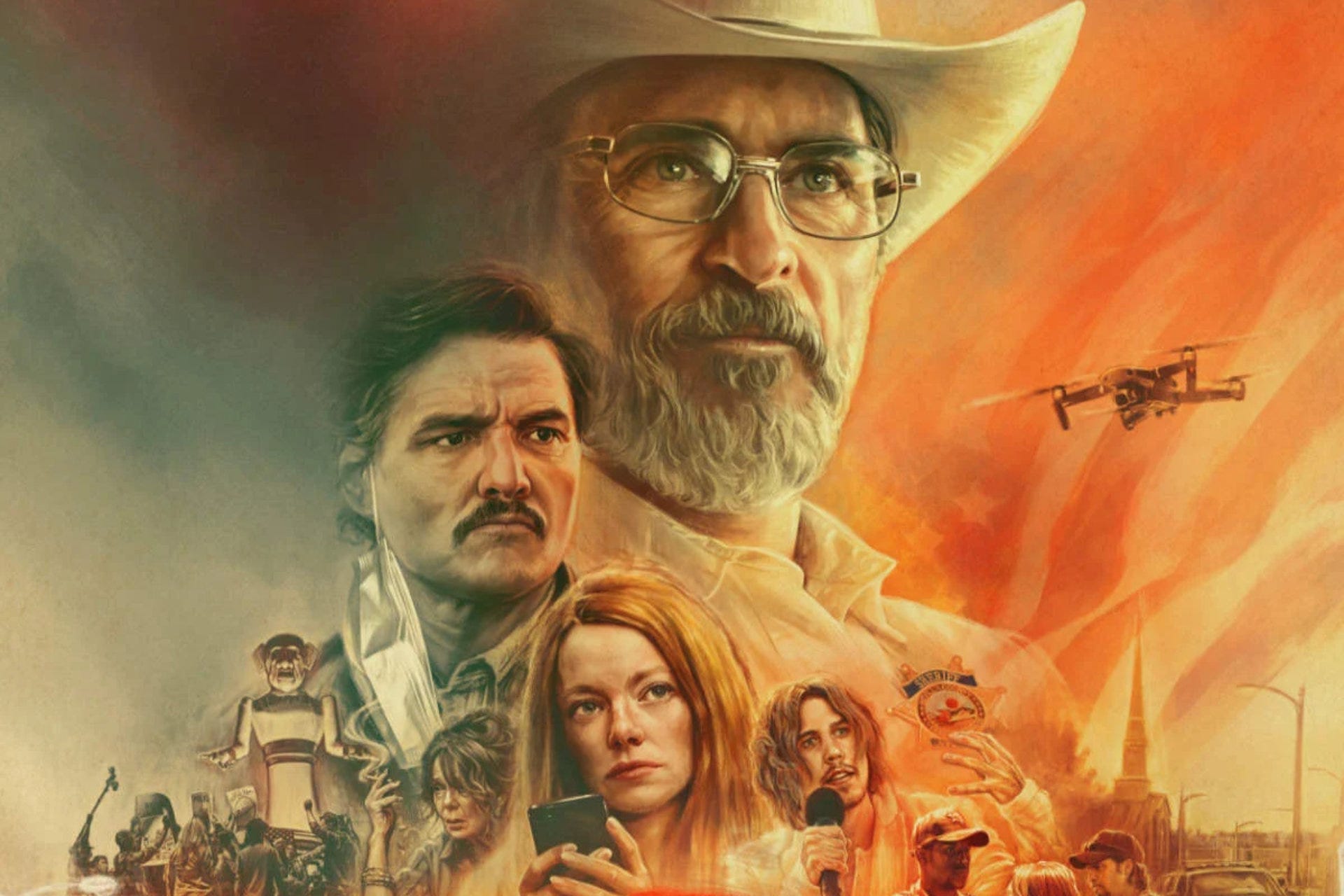
When an artist stops doing the thing you love them for, it’s hard to reconcile to them. Hereditary and Midsommar remain two of my favorite horror movies of recent years, and to see Ari Aster turn away from the genre hurts. I never watched Beau is Afraid, and it was only recently I decided to watch his latest, 2025’s Eddington.
And, well, I have no clue what to think.
Is it good? Probably. Critic Sean Fennessey said it was “the film of the year, maybe of the decade.” Yet, Eddington divided fans and audiences.
Is it significant? Most definitely.
On X the other day, I came across this post from writer Sonny Bunch:
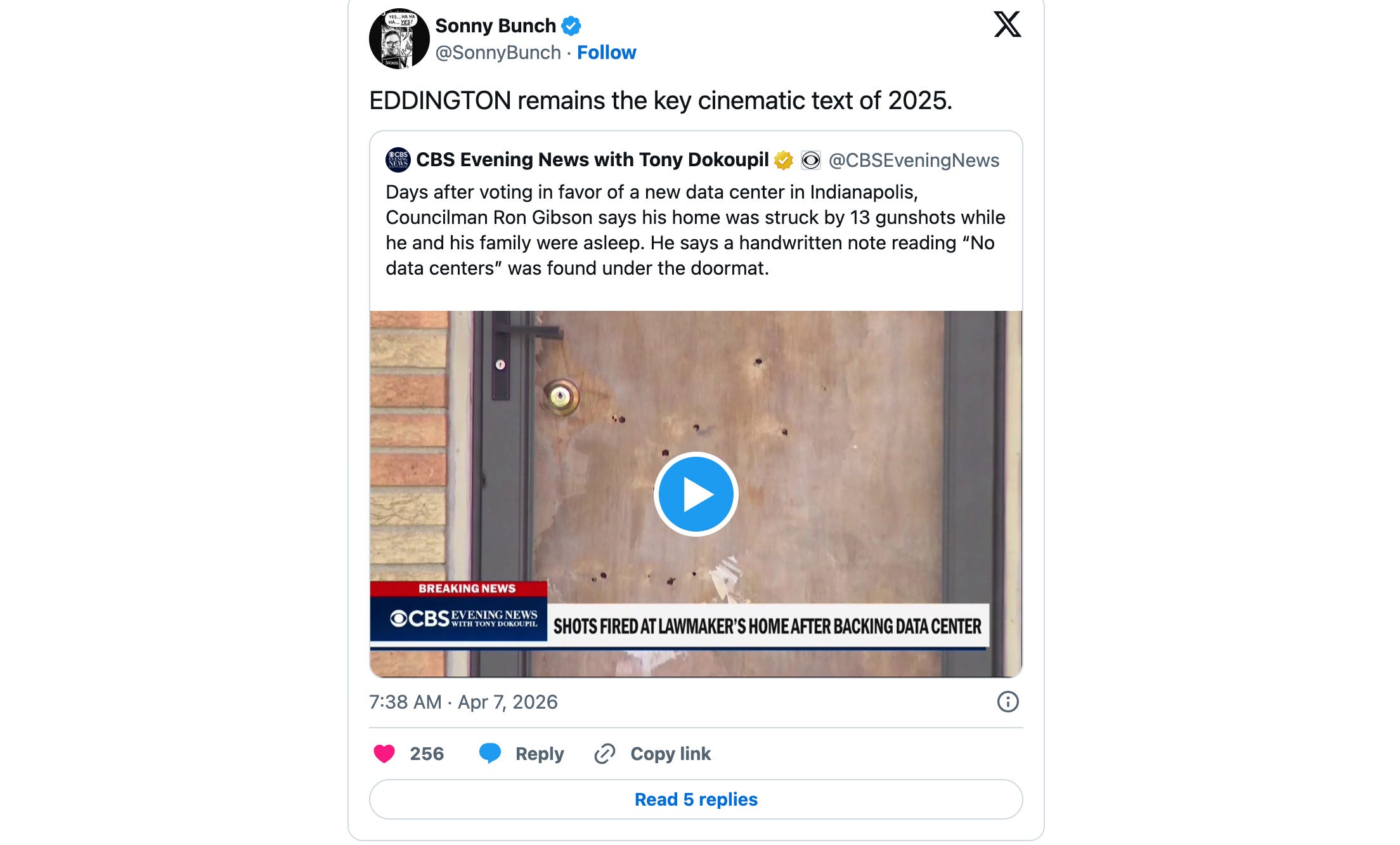
A film’s message and quality are sometimes objective. There are objective elements of great filmmaking, and sometimes, it is clear what the filmmakers wanted you to think—if they wanted you to think at all. For Eddington, however, there is a clear question over this film. The director has said that it’s a film about a data center, and let us accept the writer-director at his word. Even so, what does he want us to think about this age of distraction?
Whatever it is saying, the film angered everyone on every side. And that is a rarity these days. Hollywood films pander to either side and anger either side. Last year alone, two films seemed specifically targeted to anger those on the right: Hamlet, for those who love the Western tradition, and One Battle After Another, for anyone who leans slightly right.
Eddington angered everyone because it pointed out our failures at empathy, our performative attempts at virtue, our self-centered distractedness, and our willingness to allow the very companies responsible to thrive.
And so it all comes back to a data center.
A Brief Summary
Eddington is the story of Sheriff Joe Cross of Eddington, New Mexico during the weirdest time ever: the COVID pandemic. His wife is a mess and is basically a shut in and as such is addicted to conspiracy theories fueled by her social media feed. Her mother lives with her and Joe, causing even more dysfunction as she continually lets him know what a disappointment he is.
Tired of the mandates, Joe confronts the mayor Ted Garcia. The latter refuses to budge, so Joe decides to run against him for mayor. As the BLM protests ramp up, the campaign becomes more heated.
His wife leaves him for a podcaster, and his campaign tanks. Eventually, Joe snaps, murders Ted and his son, and then himself is attacked by violent crisis actors. The movie ends with Joe as mayor, but paralyzed and in the care of his former mother-in-law. The film ends with Joe in bed, unable to move, as his live-in medical nurse and his mother-in-law climb into the same bed with him. It is as tragic as it is hilarious.
A Failure to Notice and Feel
During the Big Picture episode on Eddington, Sean Fennessey pointed out that the clue to unlocking the film is in the first few frames, which show a homeless, barefoot man meandering down the middle of the road.
Lodge, as we come to find out, is mistreated by everyone in the city of Eddington and no one knows what to do with him. We watch as he is verbally accosted by the mayor and then physically assaulted by the chief of police.
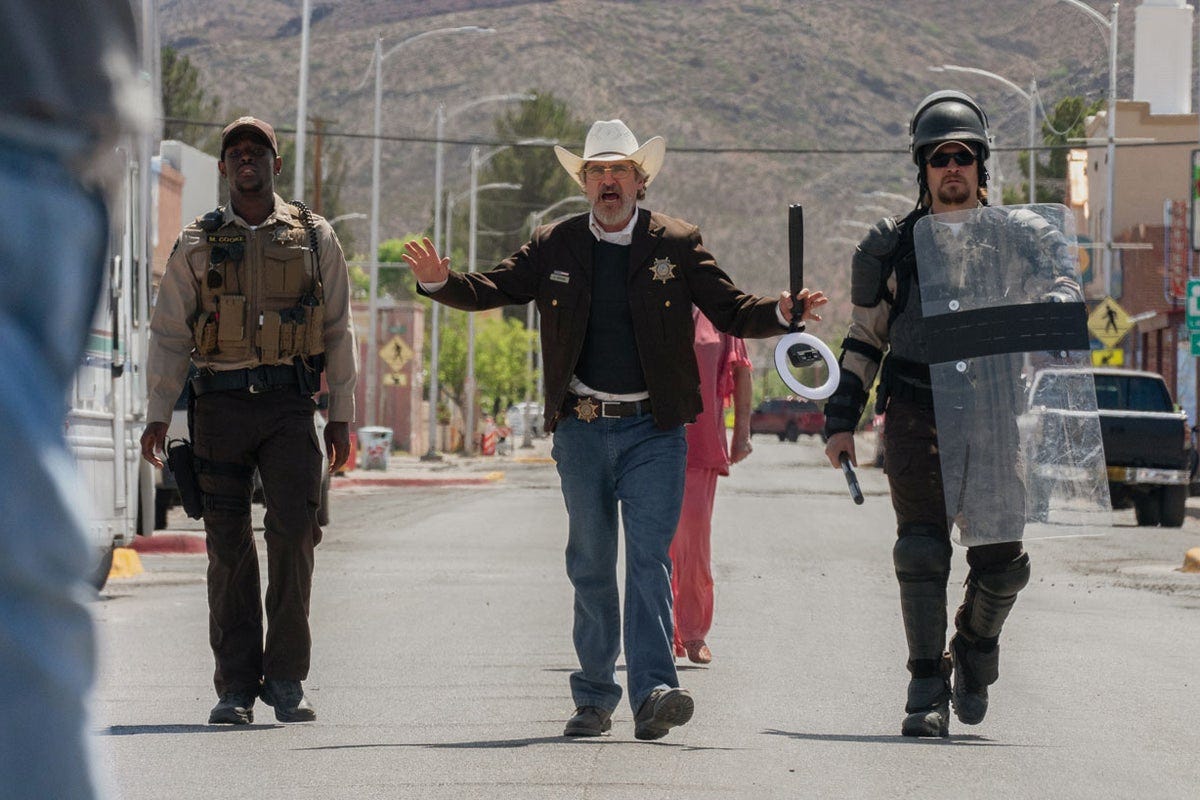
But the most telling moment is at the BLM rally halfway through the film, when those who are crying for justice completely ignore him. Aster brilliantly has the actors kneel in protest while he remains standing in the midst of them. The very people who we expect to care—and who claim to do so!—somehow are the ones who are also crying for justice.
The police trying to dispel the rally are too distracted to notice; the protestors are too busy appearing virtuous to be so.
Eddington thus highlights that we often fail to be empathetic because we are distracted, and that, even if we try to be, any attempt is often performative and misses out on the real good we could do right in front of us.
Moreover, lost in our own selfishness, we miss the real villain.
The Data Center
But the progenitor of all these evils is brought up at the beginning, murmured about in the middle, and finally highlighted in the end. Here, it must be said, we get into spoilers.
I want to recall Aster’s own comments about Eddington—that it is a film about a data center. The data center is owned by a company called Solidgoldmagikarp. It is implied that this data center is indeed being funded by shadowy elements who support the incumbent mayor.
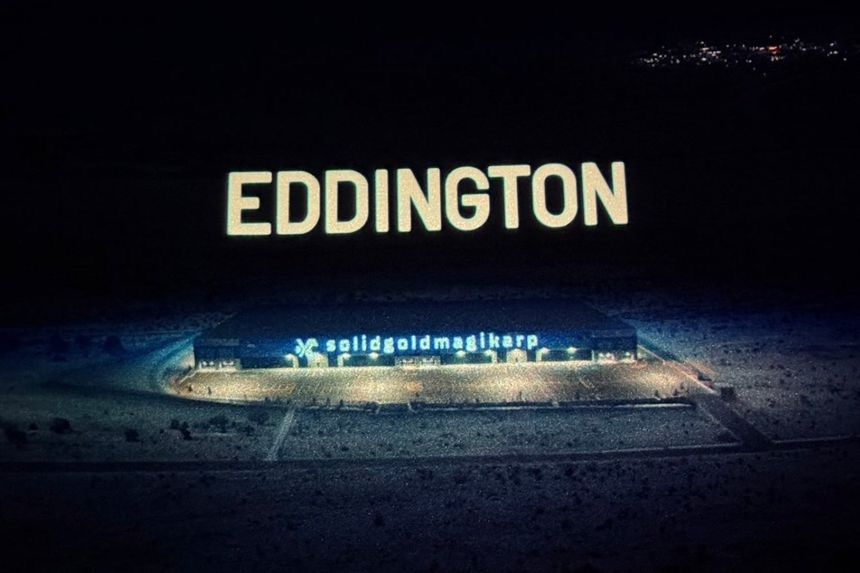
The final scene of the movie features a lifeless, paraplegic Joe Cross staring at a screen and then the movie concludes with the data center. What does the juxtaposition of these images tell us?
This is what those companies want us to be.
Soulless vegetables stuck consuming content that enrages us and distracts us. It is thus a parable of technology. How the companies using the data center do this to us is certainly less violent than to Cross, but no less true.
Because of the ecosystem of social media, the man who steals Joe’s wife has a platform with which he entices her, and which also allows the opportunity for him to meet her. Due the financial incentive of enraged engagement, the companies hire crisis actors to cause chaos and destruction, which results in Joe’s near death and paralyzation.
One could even say that Joe’s own misguided attempt a running for mayor is itself fueled by his desire to be seen, which is fostered by a social media culture. Indeed, Joe is neglected by everyone around him and not truly seen. He is as helpless and alone as Lodge is.
This explains too why he breaks in the middle of the film. After all the attention he received for his campaign, he can still be slapped at a party and no one bats an eye. He thus becomes archetypal of the incel who rages against a system only to break like waves against a rock. Incensed, he turns to violence to get his message across.
Eddington is thus a neo-Western tragedy, showcasing the perils of the attention-based economy in a world severely lacking empathy. It serves as a prophetic warning for our age and will likely be a prophecy that is only increasingly vindicated with the latest news.
The true genius is that it traces the story back to where it all began—the COVID pandemic—while projecting forward into the future. It is also therefore a timeless film centered on a specific time. That it continues to speak as it does is a sign we have not moved past 2020 and that something irrevocably changed in our culture during that time.